

Zimbabwe Bird
The Zimbabwe Bird is more than a mere national emblem; it is the definitive icon of Zimbabwe, physically and symbolically linking the modern nation to the ancient Shona civilization.
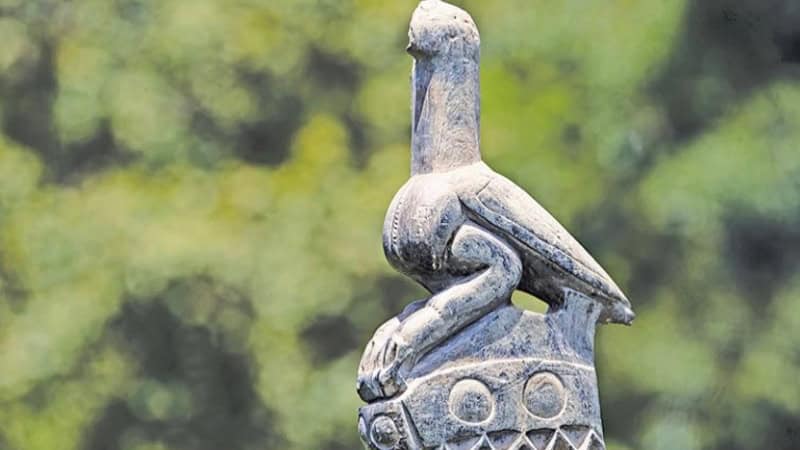
Carved from soapstone centuries ago, these enigmatic sculptures serve as a powerful testament to the artistic ingenuity, spiritual depth, and political complexity of the medieval Kingdom of Great Zimbabwe.
Origins at the Great Zimbabwe Ruins
The Zimbabwe birds were originally discovered in the ruins of Great Zimbabwe, a sprawling stone city built by the ancestors of the Shona people between the 11th and 15th centuries. The name of the country itself, “Zimbabwe,” is derived from the Shona phrase dzimba-dza-mabwe, meaning “houses of stone.”
Archaeologists unearthed eight of these soapstone carvings during excavations in the late 19th and early 20th centuries. Standing approximately 30 to 40 centimeters tall on pedestals about a meter high, these sculptures were originally installed on the walls and monoliths of the city’s eastern enclosure.
Their precise function remains a subject of academic debate, but they are widely believed to have served as symbols of royal presence, totems, or spiritual guardians representing the link between the earthly kingdom and the divine.
Physical Appearance and Symbolism
While the sculptures are clearly birds of prey, their exact species remains debated. They are most commonly associated with two raptors significant in Shona culture:
- The Bateleur Eagle (Chapungu): Revered as a messenger from Mwari (God) and the ancestors.
- The African Fish Eagle (Hungwe): It is often suggested as the original totem of the Shona people.
The carvings are distinctively stylized. Many exhibit human-like elements, such as toes instead of talons and lips instead of a bill, suggesting they were not intended as literal, naturalistic depictions but as symbolic or totemistic representations.
Some scholars have further hypothesized that their upright, protective posture—often interpreted as a bird sitting on a nest—may symbolize the nurturing and protection of the royal lineage or the nation itself.
The Zimbabwe Bird: A Turbulent History
The history of the birds is marked by colonial exploitation. During the late 19th century, European treasure hunters, including those employed by Cecil John Rhodes, removed these sacred objects from their home. They were dispersed to South Africa and Europe, becoming symbols of colonial power that were ironically appropriated by the very regimes that sought to diminish indigenous African history.
Following Zimbabwe’s independence in 1980, a concerted effort was launched to reclaim these national treasures. Through international pressure and diplomacy, the majority of the birds have since been returned to Zimbabwe.
One Zimbabwe bird, however, remains at Groote Schuur, the former home of Cecil Rhodes in Cape Town, serving as a reminder of the complex and often painful path to reclaiming cultural heritage.
A National Icon: Politics, Identity, and Culture
Today, the Zimbabwe bird is ubiquitous in the nation’s life:
- National Insignia: It features prominently on the national flag, the coat of arms, currency, stamps, and the logos of countless organizations.
- Political Legitimacy: Both the colonial and post-independence governments have utilized the bird to bolster claims of legitimacy, rooting their identity in the “Golden Age” of Great Zimbabwe.
- Artistic Influence: Beyond politics, the bird has profoundly influenced generations of Zimbabwean sculptors. It is often credited as a foundational influence on the global movement of modern Shona stone sculpture, keeping the ancient aesthetic alive in contemporary art.
For many Zimbabweans, the Zimbabwe bird is a living symbol of resilience, unity, and an enduring connection to their ancestral past. It serves as a reminder that despite centuries of upheaval, the spirit of the ancient madzimbahwe remains central to the nation’s identity.


