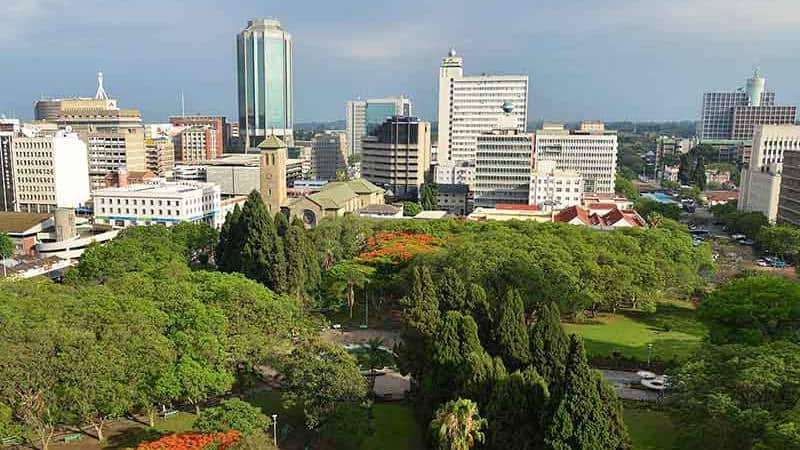
Hwange National Park
Hwange National Park is not just a destination; it is a sprawling epic of conservation, ancient migrations, and raw natural beauty toward the western edge of Zimbabwe.
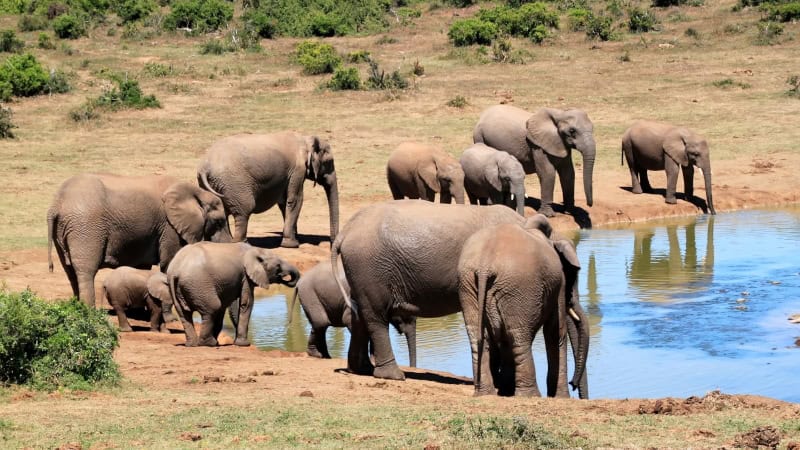
This guide provides a comprehensive breakdown of everything you need to know about this legendary sanctuary.
Where Is Hwange National Park?
Hwange National Park is located in the northwestern corner of Zimbabwe, situated in the Matabeleland North province. Its western boundary forms part of the international border with Botswana, making it a vital link in the regional cross-border conservation corridors.
The park is positioned roughly halfway between the bustling tourist hub of Victoria Falls and the historic city of Bulawayo.
Geographically, Hwange sits on the eastern edge of the Kalahari Basin. This location is significant because the park’s soil is predominantly deep Kalahari sand, which dictates the types of vegetation—mostly teak and mopane forests—that grow there.
The park is approximately 200 kilometers (125 miles) south of Victoria Falls, making it an easy addition to any itinerary involving the “Smoke that Thunders.”
Accessing the park is relatively straightforward but requires some planning. Most international travelers fly into Victoria Falls International Airport and then take a road transfer (approx. 2 to 3 hours) or a short “bush taxi” flight in a light aircraft directly to one of the park’s airstrips.
For those driving from Bulawayo, the journey is around 280 kilometers (175 miles) along the A8 highway.
The park has three main entry points:
- Main Camp (near the town of Dete)
- Sinamatella (further north near Hwange town)
- Robins Camp (in the far west)
While the main roads to the park are accessible by standard vehicles, a 4×4 is highly recommended for exploring the interior, especially if entering via the more remote northern or western gates.
Hwange National Park History
The history of Hwange is a narrative of transformation. Long before it was a designated sanctuary, the land was the ancestral home of the San people (Bushmen), whose presence is still felt through archaeological remnants and cultural memory.
Later, the area became the royal hunting grounds of the Ndebele King Mzilikazi. The park takes its name from a local Nhanzwa chief, Hwange, though it was historically known as Wankie during the colonial era.
It was officially established as the Wankie Game Reserve in 1928, a time when wildlife populations were decimated by uncontrolled hunting. The true architect of the park’s success was its first warden, Ted Davison.
Appointed at just 22 years old, Davison spent years exploring the waterless interior on foot. He realized that the Kalahari sands couldn’t hold surface water through the dry season, leading to mass animal die-offs.
In a visionary move, he began sinking boreholes to create artificial waterholes, effectively “fixing” the ecosystem’s fatal flaw.
In 1949, the reserve was upgraded to National Park status, and its boundaries were expanded to the massive 14,651-square-kilometer territory seen today. Following Zimbabwe’s independence in 1980, the park was renamed Hwange.
The transition into the 21st century has seen Hwange evolve from a fortress-style conservation model into a community-centric one. Today, it is the crown jewel of the Kavango-Zambezi Transfrontier Conservation Area (KAZA TFCA), a five-nation initiative that protects the ancient migratory paths of the world’s largest elephant population.
This historical journey from a scarred hunting ground to a globally recognized sanctuary remains one of the greatest success stories in African conservation.
Hwange National Park Activities
Adventure in Hwange is diverse, catering to both the luxury traveler and the rugged explorer.
The quintessential activity is the game drive, conducted in open-sided 4×4 vehicles. Because the park is so vast, drives can range from short morning excursions to full-day safaris that venture deep into the remote western corners like Robins Camp or Sinamatella.
Night drives are a unique highlight, offering a chance to see nocturnal specialists like leopards, servals, and honey badgers.
For those seeking a more visceral connection to the bush, guided walking safaris are unparalleled. Led by highly trained armed rangers, these walks focus on the “smaller” details of the ecosystem—tracking lions by their prints, identifying bird calls, and learning about the medicinal properties of the indigenous flora.
Hwange’s flat terrain makes it ideal for these treks, providing long sightlines that ensure safety while allowing for incredible intimacy with the landscape.
One of Hwange’s most famous modern activities is the Elephant Express, a specialized railcar that travels along the park’s eastern boundary. This two-hour journey offers a unique “rail safari” experience, allowing guests to spot wildlife from the comfort of a vintage-style tram while moving between safari camps.
Additionally, the park is famous for its wildlife hides. These are camouflaged structures built near major waterholes, such as Nyamandhlovu Pan. Here, you can sit in silence for hours, watching the drama of the wild unfold just meters away—from the social hierarchies of elephant herds to the tense arrivals of thirsty buffalo.
Finally, birdwatching in Hwange is world-class, with over 400 species, ranging from the massive Kori Bustard to the vivid Carmine Bee-eater, ensuring that every binocular-toting visitor leaves satisfied.
Best Time to Visit Hwange National Park
Choosing when to visit Hwange depends entirely on what you want to experience, as the park undergoes a total metamorphosis between seasons.
However, for most safari enthusiasts, the peak dry season (July to October) is widely considered the best time to visit. During these months, the vegetation thins out and the natural water sources dry up completely.
This forces the wildlife to congregate in massive numbers around the artificial waterholes. This is the time for “armchair safaris,” where you can simply park your car at a pan and watch a continuous parade of elephants, buffalo, lions, and plains game come to you.
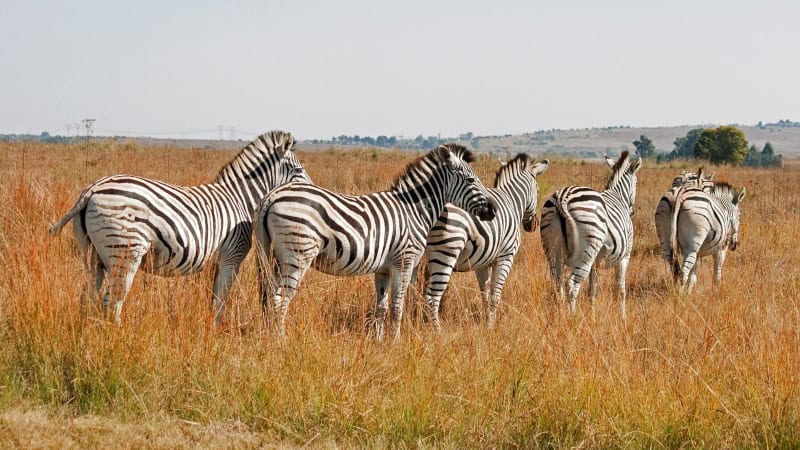
If you are a birding enthusiast or a photographer who prefers lush, vibrant colors, the Green Season (December to March) is the hidden gem. This is the time of “plenty,” when many species give birth to their young, and the park is filled with the sights and sounds of baby impalas and zebras.
The migratory birds arrive from the northern hemisphere, filling the trees with song and color. While wildlife is more dispersed and harder to spot through the thick foliage, the lack of dust and the dramatic stormy skies make for spectacular photography.
For those looking for a balance of good weather and great sightings, the “shoulder” months of May and June are ideal. The air is crisp and clear, the temperatures are moderate, and the crowds are thinner than in the peak months.
The grass is still relatively green, but the animals are beginning to move toward the waterholes. Regardless of when you choose to go, Hwange’s sheer biomass ensures that you will never have a “quiet” day in the bush, though the dry season remains the undisputed champion for seeing the famous “super-herds” of elephant.
Hwange National Park Size
Spanning approximately 14,651 square kilometers (roughly 5,657 square miles), Hwange is the largest national park in Zimbabwe and one of the most significant protected areas in Southern Africa.
To put its size into perspective, it is roughly the size of the state of Connecticut or the country of Belgium. This immense scale is not just a statistic; it is a biological necessity for the survival of large-scale migratory species.
The park is divided into three distinct administrative and ecological sectors: Main Camp, Sinamatella, and Robins Camp. The Main Camp area, characterized by vast open plains and Kalahari sands, is the most accessible and hosts the highest density of tourism infrastructure.
In contrast, the Sinamatella and Robins sectors in the north and west offer a more rugged, hilly landscape dominated by basalt formations and mopane woodlands. This topographic diversity means that Hwange is essentially several parks in one, supporting 107 different mammal species—the highest diversity of any Zimbabwean park.
The sheer size of Hwange allows it to serve as a critical anchor for the KAZA Transfrontier Conservation Area. This vastness provides “habitat security,” ensuring that animals like the African Painted Dog have the massive ranges they require for hunting.
It also accommodates an elephant population that has grown to over 45,000 individuals. Managing a territory of this magnitude requires significant infrastructure, including over 480 kilometers of maintained roads and a network of over 100 artificial waterholes.
For the visitor, the park’s size means that even during the peak season, it is possible to drive for hours without seeing another vehicle, preserving that rare sense of true African isolation.
Alternative National Park To Visit: Matopos Wildlife Park
Hwange National Park Weather
Hwange National Park operates on a semi-arid rhythm, dictated by its location on the edge of the Kalahari Desert.
The climate is defined by three distinct seasons: the cool-dry season, the hot-dry season, and the warm-wet “green” season. In 2026, weather patterns have remained relatively consistent with historical averages.
Cool-Dry Season
The cool-dry season (May to August) offers the most temperate conditions. Daytime temperatures are pleasant, often hovering around 25°C, but the nights and early mornings are remarkably cold, sometimes dropping to near freezing. This is a period of clear blue skies and zero rainfall, making it a favorite for those who prefer comfortable trekking conditions.
Hot-Dry Season
As the calendar turns to the hot-dry season (September to October), the heat intensifies significantly. This is the “suicide month” in local parlance, with temperatures often soaring above 40°C. The air is dry and dusty, and the landscape turns a deep, sun-bleached gold.
While the heat can be punishing, it is the most dramatic time for weather-driven wildlife behavior, as the lack of rain forces every living thing to the permanent waterholes.
Warm-Wet Season
Finally, the warm-wet season (November to April) brings the life-giving rains. As seen in early 2026, the park often experiences scattered thunderstorms and heavy afternoon downpours. The rain transforms the parched sands into a lush, emerald paradise. Humidity increases, and temperatures settle into a warm range of 28°C to 32°C.
While the rain can make some secondary roads muddy and difficult to navigate, the electric atmosphere of a Kalahari thunderstorm—complete with dramatic lightning displays across the open plains—is a weather event unlike any other on the continent.
Hwange National Park Entrance Fees
For 2026, the Zimbabwe Parks and Wildlife Management Authority (Zimparks) has maintained a structured fee system designed to balance accessibility for locals with the necessary revenue for conservation.
Entrance fees are charged per person, per day, and vary based on residency status.
- International Visitors: Adult fees are currently US$20 per day, while children (under 12) pay US$10 per day.
- SADC Residents: Visitors from the Southern African Development Community (including South Africa, Botswana, and Namibia) pay US$15 per day for adults and US$8 for children.
- Local Zimbabweans: To encourage domestic tourism, fees for residents are significantly lower, at US$5 per day for adults and US$3 for children.
In addition to personal entrance fees, there are vehicle entry fees. For a standard foreign-registered 4×4 or saloon vehicle, the fee is approximately US$10 per stay, while locally registered vehicles are charged slightly less.
f you are planning on camping within the park, there are additional site fees that range from US$20 to US$100 depending on whether you are at a public site like Main Camp or a more exclusive “wilderness” camp.
While these fees are standardized, many private safari lodges include these costs in their nightly rates, so it is worth checking with your tour operator.
Payment can typically be made in USD or local currency at the prevailing bank rate at the main entry gates (Main Camp, Sinamatella, or Robins).
These contributions are vital; in a park with no natural permanent water, your entrance fee literally helps keep the pumps running and the elephants hydrated.